

From
StayCurrentMD
Pediatric Oncofertility: From Cryopreservation to Future Fertility Solutions
With Dr. Monica Laronda
Part of
Pediatric Oncology 692 items
Educational content from recorded physician discussions — not medical advice. Talk to your (or your child's) care team about your situation.
Only a few other public items share this expert — go deeper there →
Video
Intestinal Atresia Types Explained: Grossfeld Classification for Pediatric Surgery
1 min · Published Sep 2026
Video
Derivation and validation of the Pediatric Community-Acquired Pneumonia Severity (PedCAPS) score: A prospective cohort study
50 s · Published Sep 2026
Video
FETO for Late-Diagnosed Severe Congenital Diaphragmatic Hernia (CDH) at Cincinnati Children's with Dr. Beth Rymeski
4 min · Published Sep 2026
Video
Severe Congenital Diaphragmatic Hernia (CDH) Case: FETO Management & Unexpected Findings with Dr. Beth Rymeski
3 min · Published Sep 2026
Video
Fetoscopic Endoluminal Tracheal Occlusion (FETO) Procedure: Step-by-Step Guide with Dr. Beth Rymeski
4 min · Published Sep 2026
Video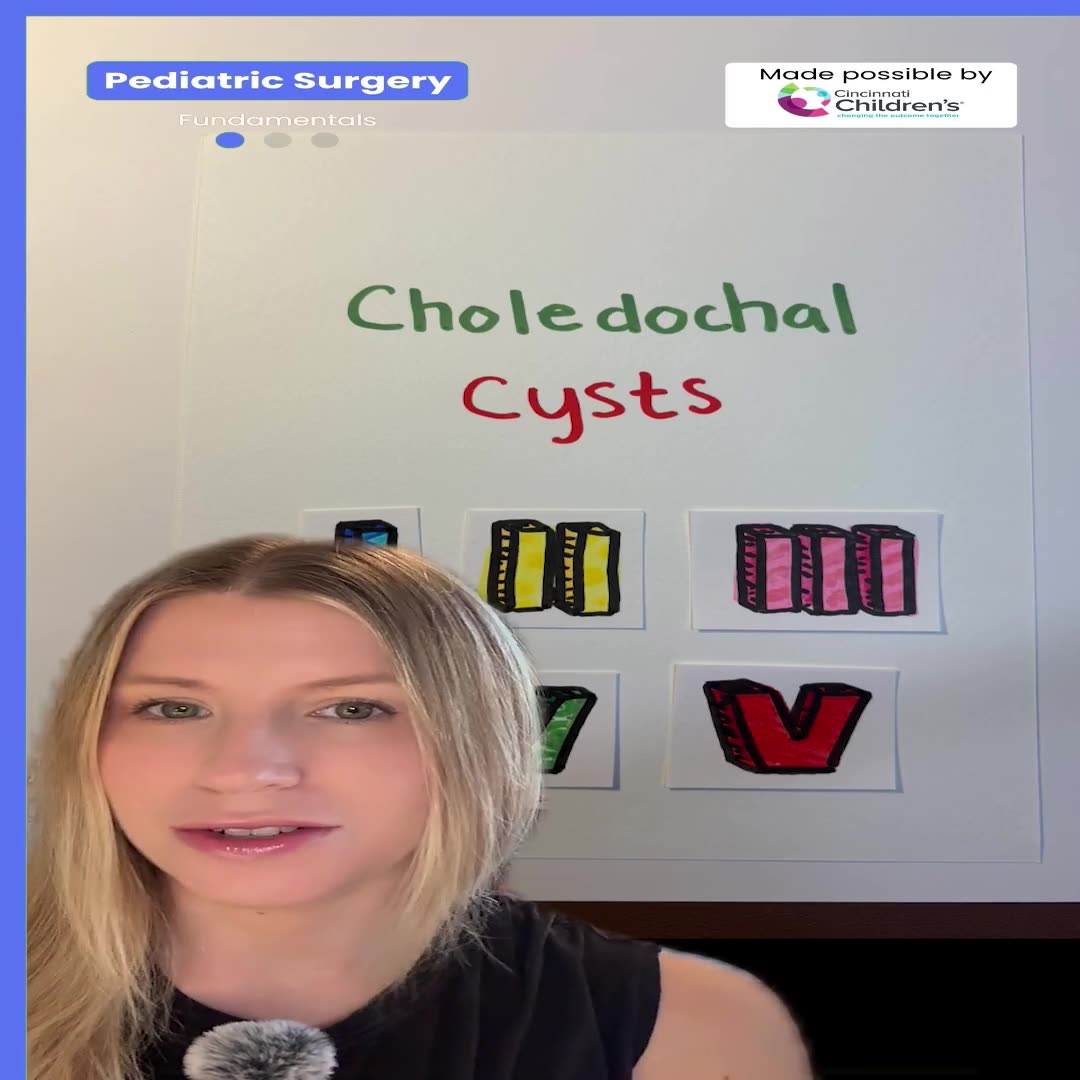
Choledochal Cyst Types Explained: Pediatric Surgery Fundamentals
1 min · Published Sep 2026
What the experts said
Cancer treatments can cause gonadal failure, limiting or destroying the patient's ability to produce offspring in the future.
Loss of control over reproductive future is one of the top quality of life parameters of importance for childhood cancer survivors.
Most cancer survivors prefer to have a biological offspring over a gamete donation or a gestational carrier.
The American Society of Clinical Oncology guidelines underscore the importance of discussing with newly diagnosed cancer patients that their future fertility may be affected by cancer treatments.
Parents want fertility preservation options presented for their children regardless of their infertility risk or prognosis.
Fertility preservation is important for any child at risk for premature gonadal insufficiency, including Turner syndrome and mixed gonadal dysgenesis.
Children with ovaries can undergo ovarian stimulation and oocyte retrieval if they've gone through puberty, or ovarian tissue cryopreservation for pediatric, adolescent and young adult patients.
Children with testes can bank sperm if they've gone through puberty or opt for testicular tissue cryopreservation.
Patient risk for premature gonadal insufficiency is determined by calculating cumulative cyclophosphamide equivalent dose, imminent surgery, chemotherapy with alkalating agents, or radiation therapy.
A normal ovary has about 300,000 follicles at the time of birth, declining steadily until reaching menopause around age 50.
A 12-year-old that receives radiation of 10 gray can undergo menopause at approximately 19.5 years old.
Life expectancy can be reduced by 2 years from additional comorbidities that result from the lack of gonadal hormones in patients experiencing early menopause.
The Lurie Children's fertility preservation program first started collaborating with Northwestern University Oncofertility Consortium in 2011, with the first patient enrolled in March 2011.
The program has performed over 200 ovarian tissue cryopreservation patients and approximately 170 testicular tissue cryopreservation patients.
Approximately 25% of ovarian tissue cryopreservation patients are referrals from outside of Lurie Children's Hospital.
Ovarian tissue cryopreservation is performed with a unilateral oophorectomy, and the other ovary compensates and maintains the same level of hormones.
There is little difference in age at menopause after unilateral oophorectomy.
When able, the laparoscopic oophorectomy is done at the time of another procedure required for the patient's cancer diagnosis to decrease the number of times the patient will be under general anesthesia.
The first successful ovarian tissue cryopreservation and transplantation in a large animal model was done in sheep in 1994.
The first live births following an ovarian autotransplant from frozen thawed tissue happened between 2004 and 2006 in Israel.
The bioprosthetic ovary concept involves removing primordial follicles from any cancer cells and placing them into a supportive engineered microenvironment that produces continuous hormones and regular ovulation for spontaneous pregnancies.
There are approximately 140 reported live births from ovarian tissue autotransplantation.
The rate of autotransplantation for recipients who have restored fertility is between 20% and 40%.
Hormone production from ovarian tissue autotransplantation lasts an average of 2 to 5 years and has been reported to exceed 12 years.
For many cancer patients, there is a possibility of reintroducing cancer cells from their tissue during autotransplantation.
A 3D printed scaffold composed of 10% gelatin was able to grow healthy oocytes from mice.
Green fluorescent protein expressing follicles added to 3D printed scaffolds and transplanted into mice without this protein were able to spontaneously produce pups that expressed the green fluorescent protein.
Infants with very young ovaries are significantly different in their makeup of different cell types compared to prepubertal and postpubertal ovaries from slightly older individuals.
82 different matrosome proteins were found in the ovary, with 42 significantly differentially expressed across different compartments.
11 matrosome proteins were discovered that had not yet been previously identified within the ovary.
The density of extracellular matrix protein matched the rigidity curve of atomic force microscopy analysis in the ovary.
The rigidity of the ovary might be in part due to the amount of extracellular matrix proteins that exist within a region.
Many patients cannot undergo autotransplantation due to the risk of reintroducing cancer cells into their bodies.