

From
StayCurrentMD
Update Course Rewind: Fertility Preservation 2023
With Dr. Aaron Rowell & Dr. Lesley Breech · hosted by Dr. Em Gootee & Dr. Todd Ponsky
Part of
Pediatric Oncology 692 items
Educational content from recorded physician discussions — not medical advice. Talk to your (or your child's) care team about your situation.
Video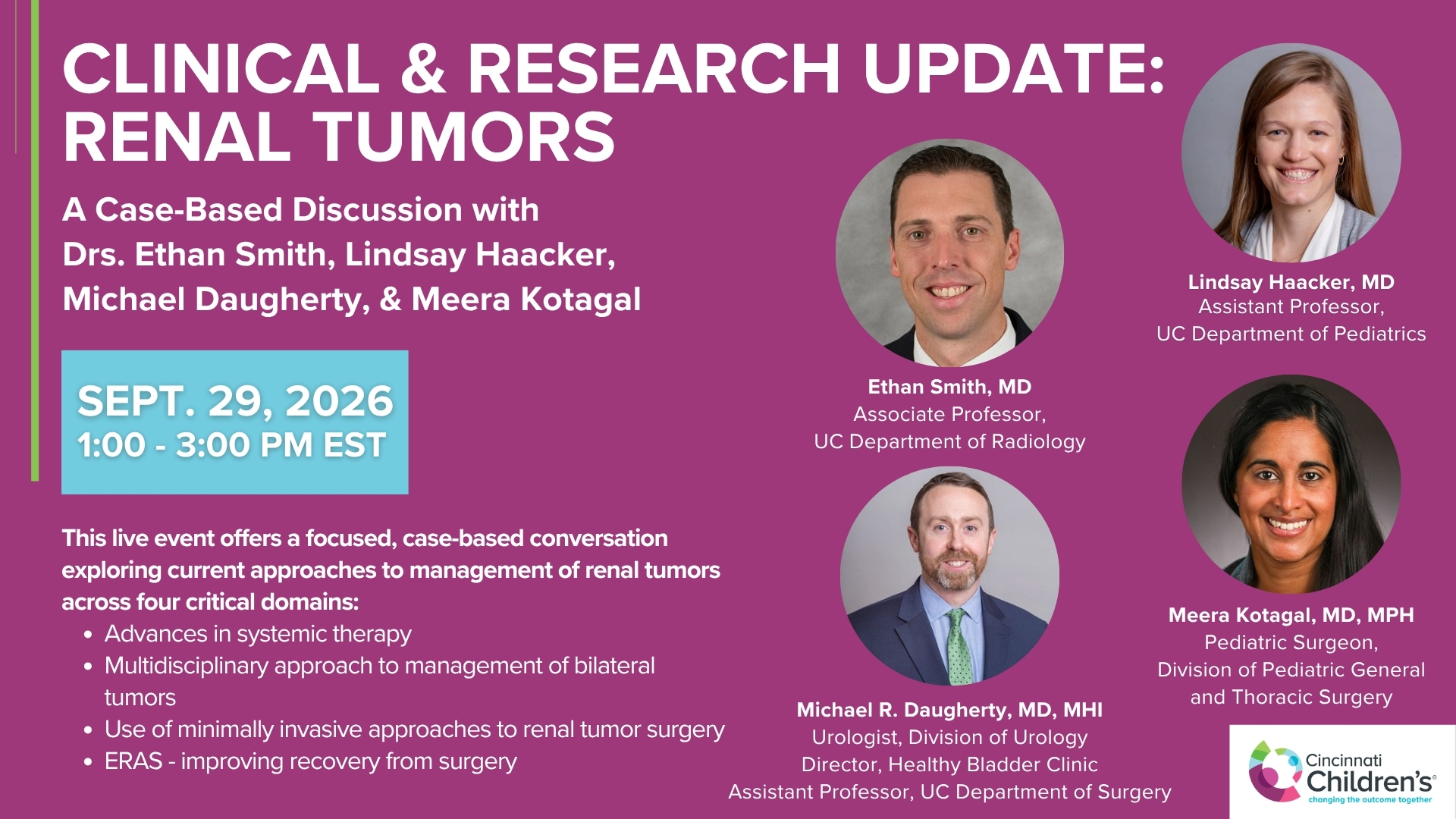
Clinical & Research Update: Renal Tumors with Drs. Ethan Smith, Lindsay Haacker, Michael Daugherty, and Meera Kotagal
71 min · Published Sep 2026
Video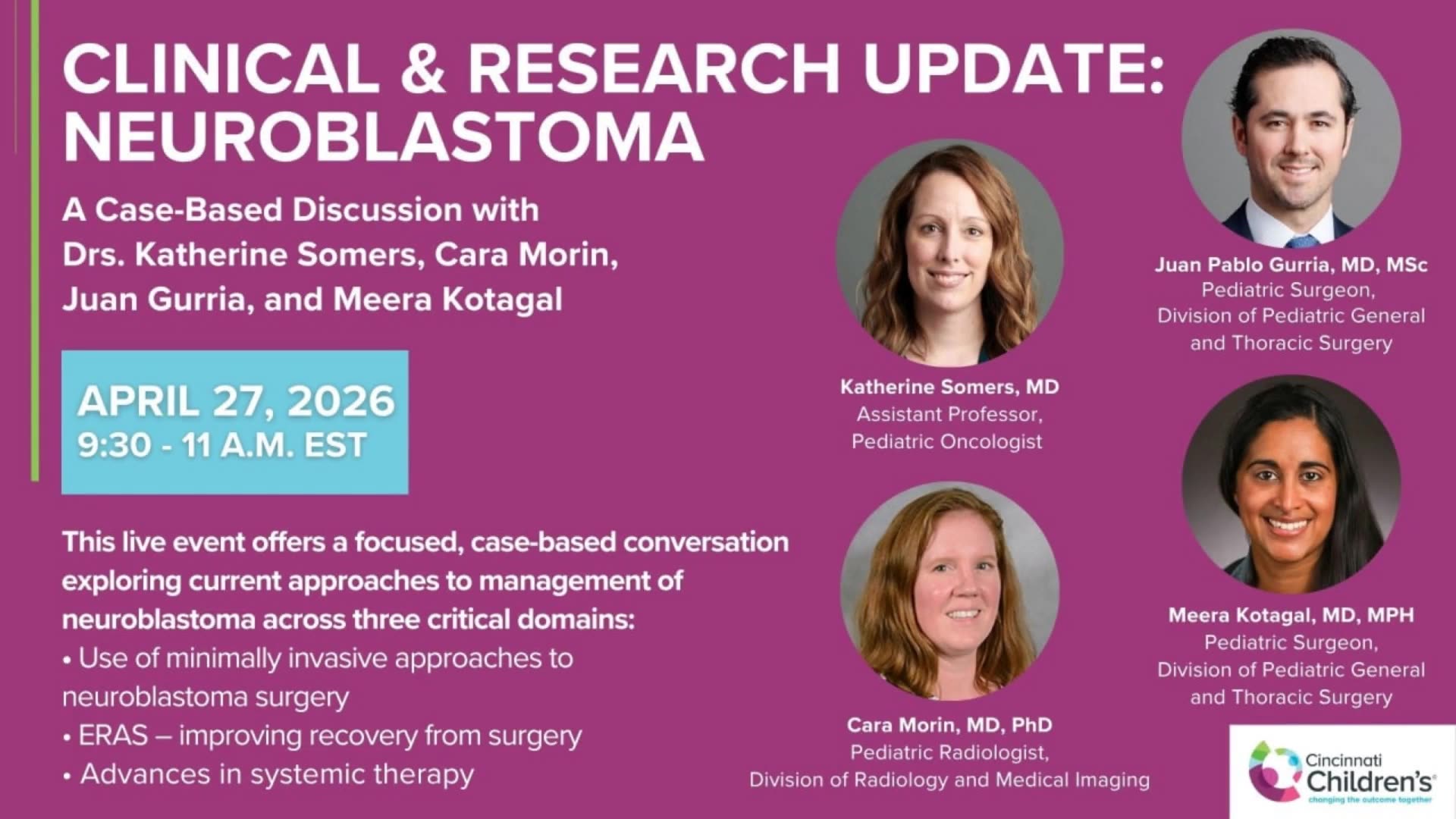
Clinical & Research Update: Neuroblastoma with Drs. Katherine Somers, Cara Morin, Juan Gurria, and Meera Kotagal
67 min · Published Sep 2026
Video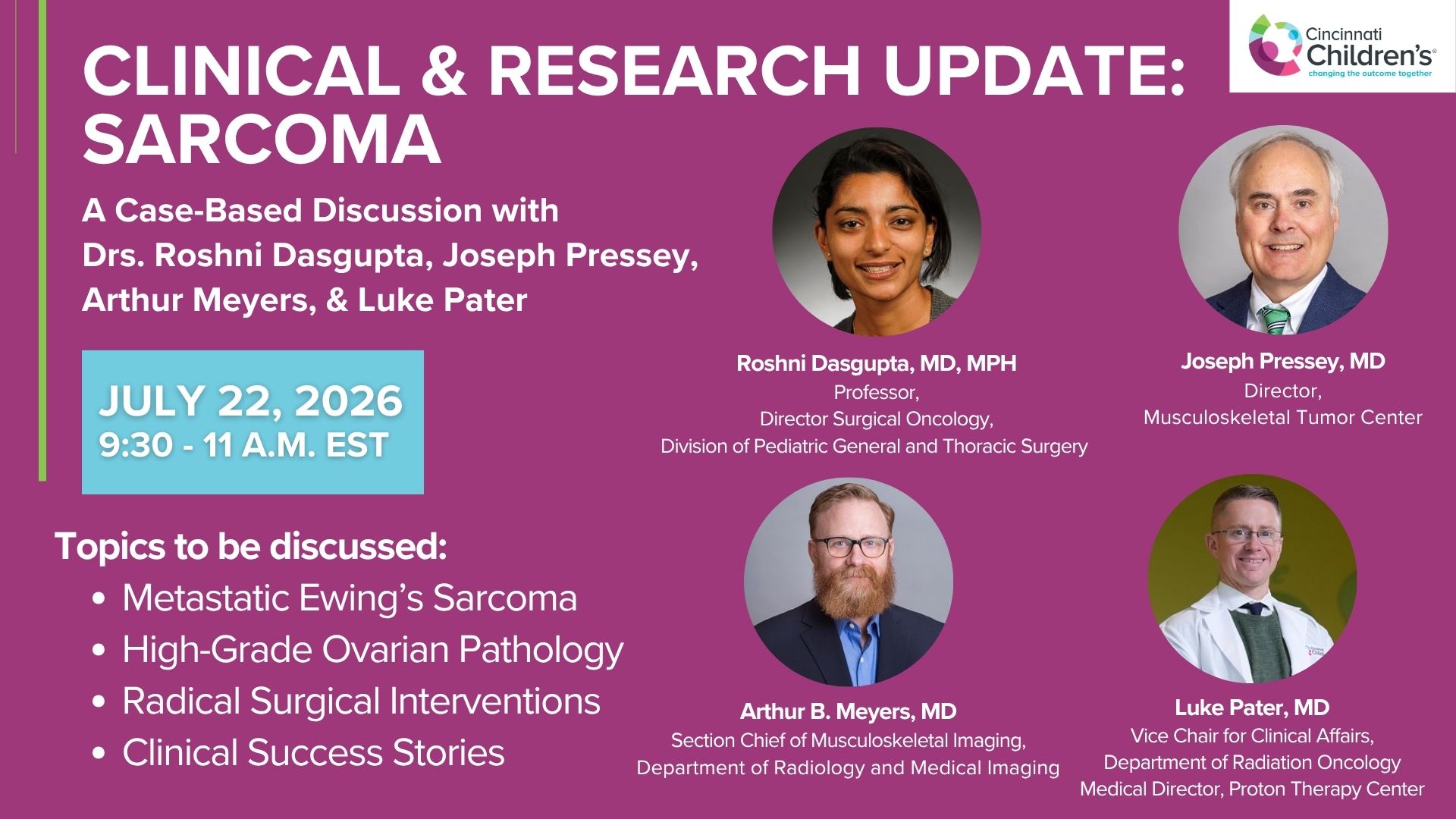
Clinical & Research Update: Sarcoma w/ Drs. Roshni Dasgupta, Joseph Pressey, Arthur Meyer, Luke Pater
66 min · Published Sep 2026
Video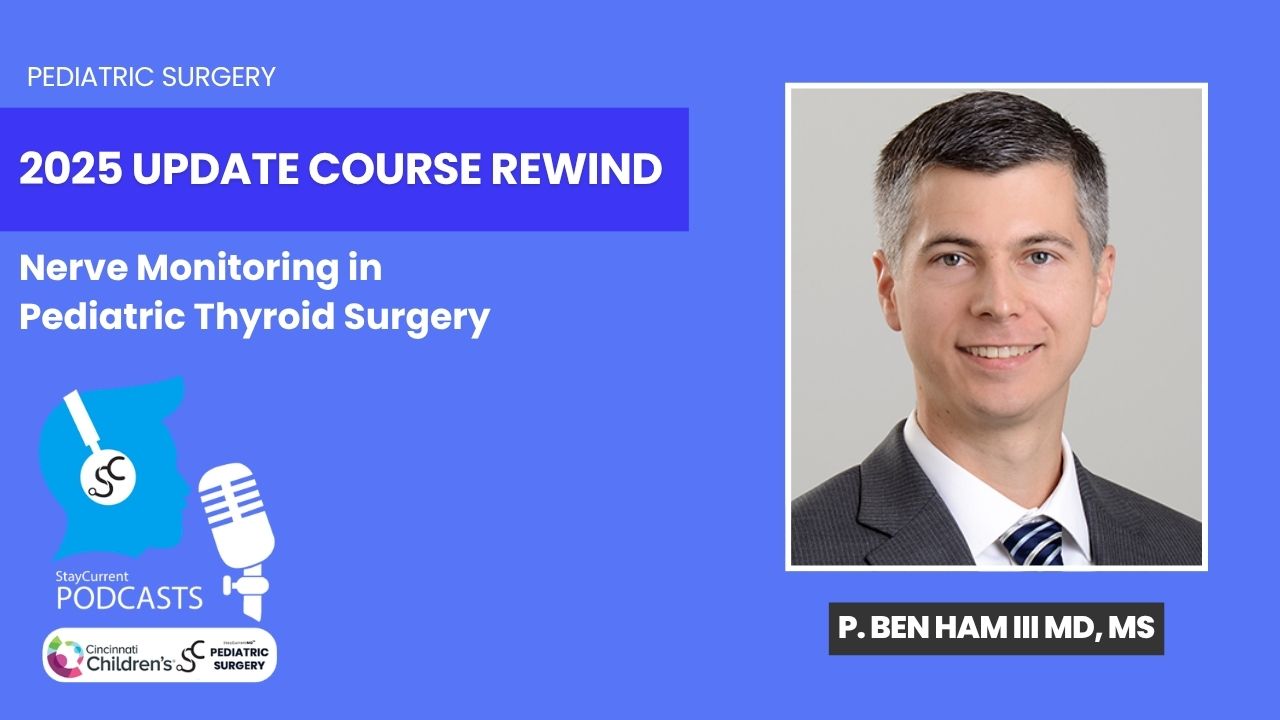
Update Course Rewind 2025: Nerve Monitoring in Pediatric Thyroid Surgery
6 min · Published Jul 2026
Video
Journal of Pediatric Surgery Article Review: June 2023, AAP Issue
Todd Ponsky · 13 min · Published Jul 2026
Video
Pediatric Surgical Oncology Research Collaborative (PSORC): Studying Rare Pediatric Tumors
56 s · Published May 2026
Only a few other public items share this expert — go deeper there →
Video
Intestinal Atresia Types Explained: Grossfeld Classification for Pediatric Surgery
1 min · Published Sep 2026
Video
Derivation and validation of the Pediatric Community-Acquired Pneumonia Severity (PedCAPS) score: A prospective cohort study
50 s · Published Sep 2026
Video
FETO for Late-Diagnosed Severe Congenital Diaphragmatic Hernia (CDH) at Cincinnati Children's with Dr. Beth Rymeski
4 min · Published Sep 2026
Video
Severe Congenital Diaphragmatic Hernia (CDH) Case: FETO Management & Unexpected Findings with Dr. Beth Rymeski
3 min · Published Sep 2026
Video
Fetoscopic Endoluminal Tracheal Occlusion (FETO) Procedure: Step-by-Step Guide with Dr. Beth Rymeski
4 min · Published Sep 2026
Video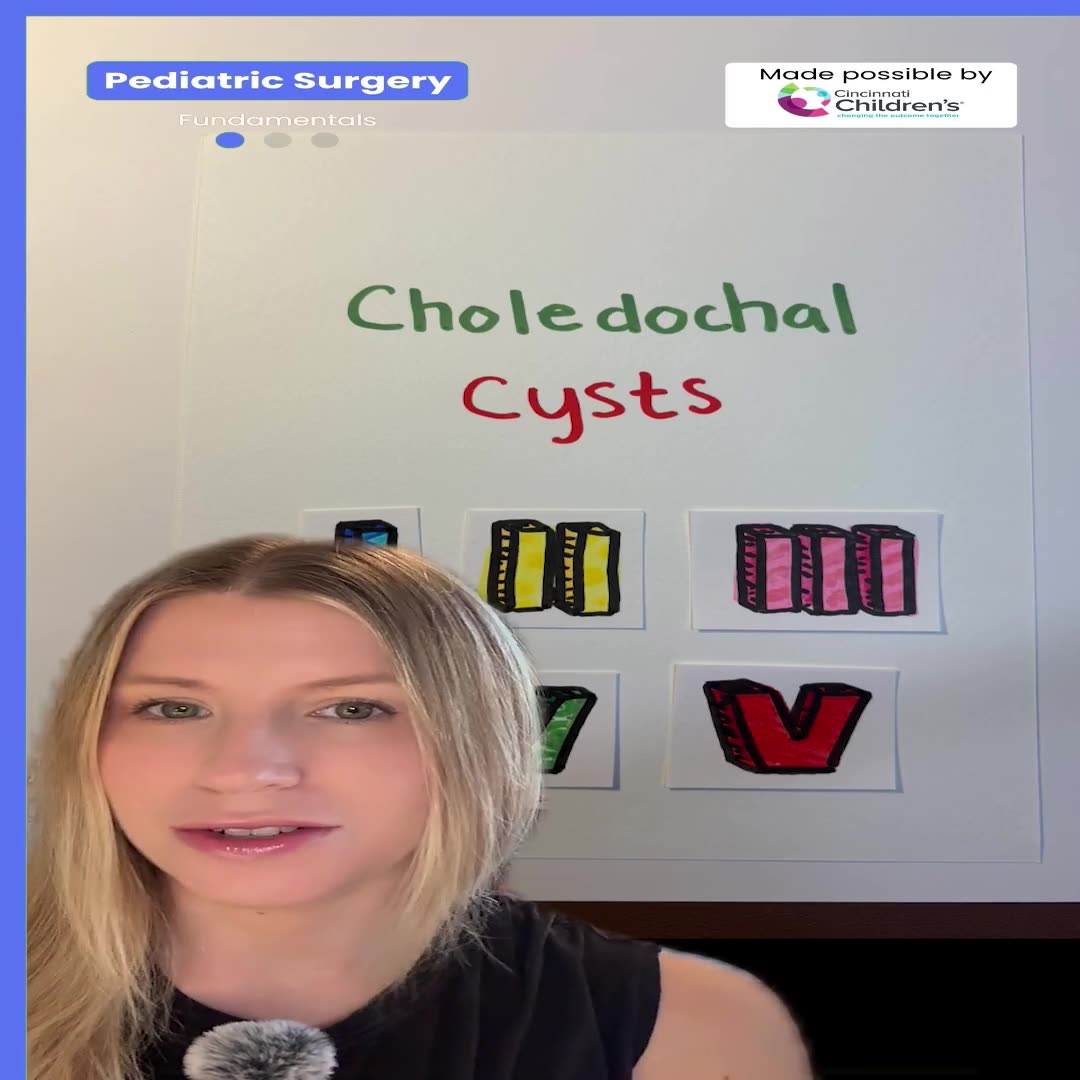
Choledochal Cyst Types Explained: Pediatric Surgery Fundamentals
1 min · Published Sep 2026
What the experts said
All patients and families should receive fertility counseling, as this is a standard recommended by major societies including ASCO, AAP, and ASRM.
Around 20 to 30% of families will intervene and ask to do something to preserve fertility.
Counseling should occur and be documented prior to the start of high-risk chemotherapy, even if families don't proceed with any surgery.
For a pre-pubertal girl, a CED (cyclophosphamide equivalent dose) of 8 to 12 grams or more places them at high level of risk for premature ovarian insufficiency, making them a candidate for oophorectomy.
For a post-pubertal patient, a CED of 4 grams per meter squared or more indicates high risk for premature ovarian insufficiency.
A pre-pubertal child's ovary is about 2 centimeters in size, approximately the size of a grape.
Laparoscopic oophorectomy rather than biopsy is the best recommendation for pre-pubertal patients because a biopsy can damage the ovary and put the child at high risk for hemorrhage, which would impact the child's ability to start stem cell transplant or chemotherapy.
Re-implanted ovarian strips can restore ovarian function for about two to five years and can result in live birth.
Live birth from re-implanted ovarian tissue has occurred in two children who were nine years old, but has not yet happened in anyone younger in the United States.
A small biopsy of one ovary would not give enough tissue to sustain a child's entire reproductive future.
Surgeons should stay at least a centimeter away from the ovarian capsule because that's where all the follicle pool is located.
In a piglet model that mimics a pre-pubertal child, if surgeons stay at least a centimeter away from the ovarian capsule, there were healthier tissue parameters including production of glucose, decreased lactose, and increased estradiol from ovarian follicles in culture.
The fimbria are very fragile and can develop scarring leading to hydrosalpinx later if not protected during surgery.
The Cool Seal device has a 3 mm option suitable for really small children and can help maintain distance from the ovarian capsule.
In Dr. Rowell's experience with about 140 patients, 17 had abdominal pelvic tumor surgery within a month of their laparoscopic oophorectomy, at a median of 29 days after open surgery.
Of 17 patients who had recent abdominal pelvic tumor surgery, 16 underwent laparoscopic oophorectomy with no trouble, and one was done open by choice because they needed another tumor biopsy.
A fertility navigator role, often filled by a nurse, integrates between oncology, surgery, urology, and gynecology and has been strongly advocated in the literature.