

From
StayCurrentMD
Wilms Tumor Rapid Fire: Update Course 2015
Educational content from recorded physician discussions — not medical advice. Talk to your (or your child's) care team about your situation.
Video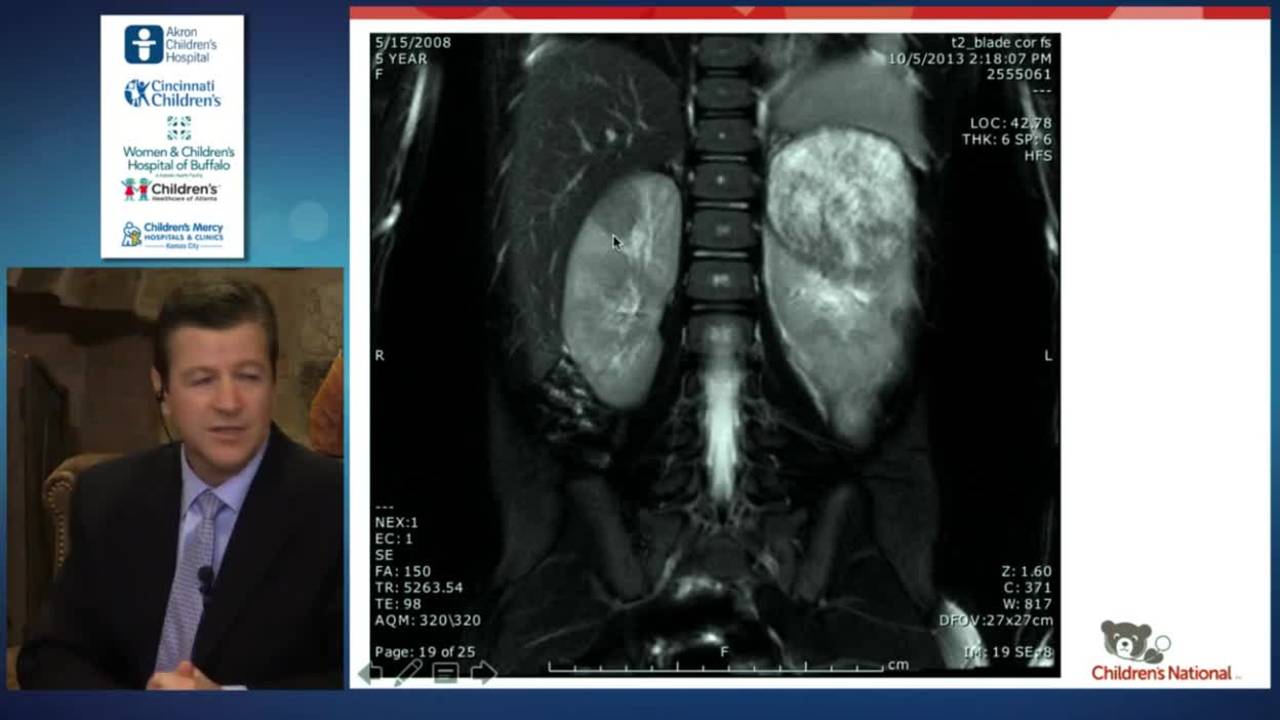
Bilateral Wilm's Tumor - Complex Gastroschisis - Complex Ileal Atresia:...
29 min · Published Nov 2018
Video
Compiled Sandler Rapid Fire Sessions: Update Course 2015
29 min · Published Nov 2015
Video
Updated Favorable histology Wilms tumor risk stratification: Rationale for future Children’s Oncology Group clinical trials
53 s · Published Apr 2026
Video
Impact of Pulmonary Tumor Burden in Favorable Histology Wilms Tumor Outcomes: A Report From the Children's Oncology Group Study AREN053
1 min · Published Mar 2026
Video
Long-Term Follow-Up of Surgical Outcomes for Patients With Wilms Tumor and Neuroblastoma
1 min · Published Feb 2026
Video
Wilms Tumor
Published May 2020
Video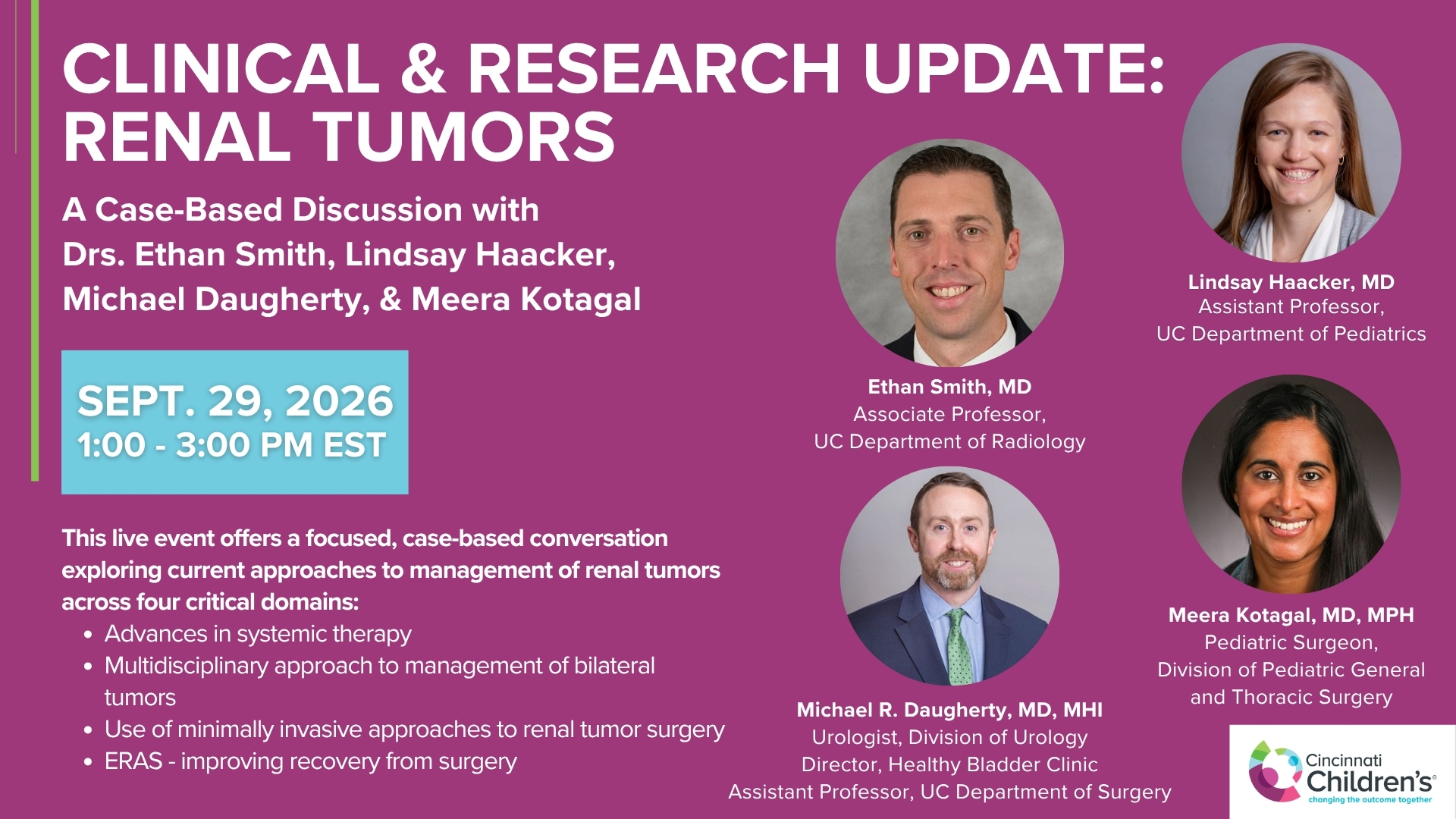
Clinical & Research Update: Renal Tumors with Drs. Ethan Smith, Lindsay Haacker, Michael Daugherty, and Meera Kotagal
71 min · Published Sep 2026
Video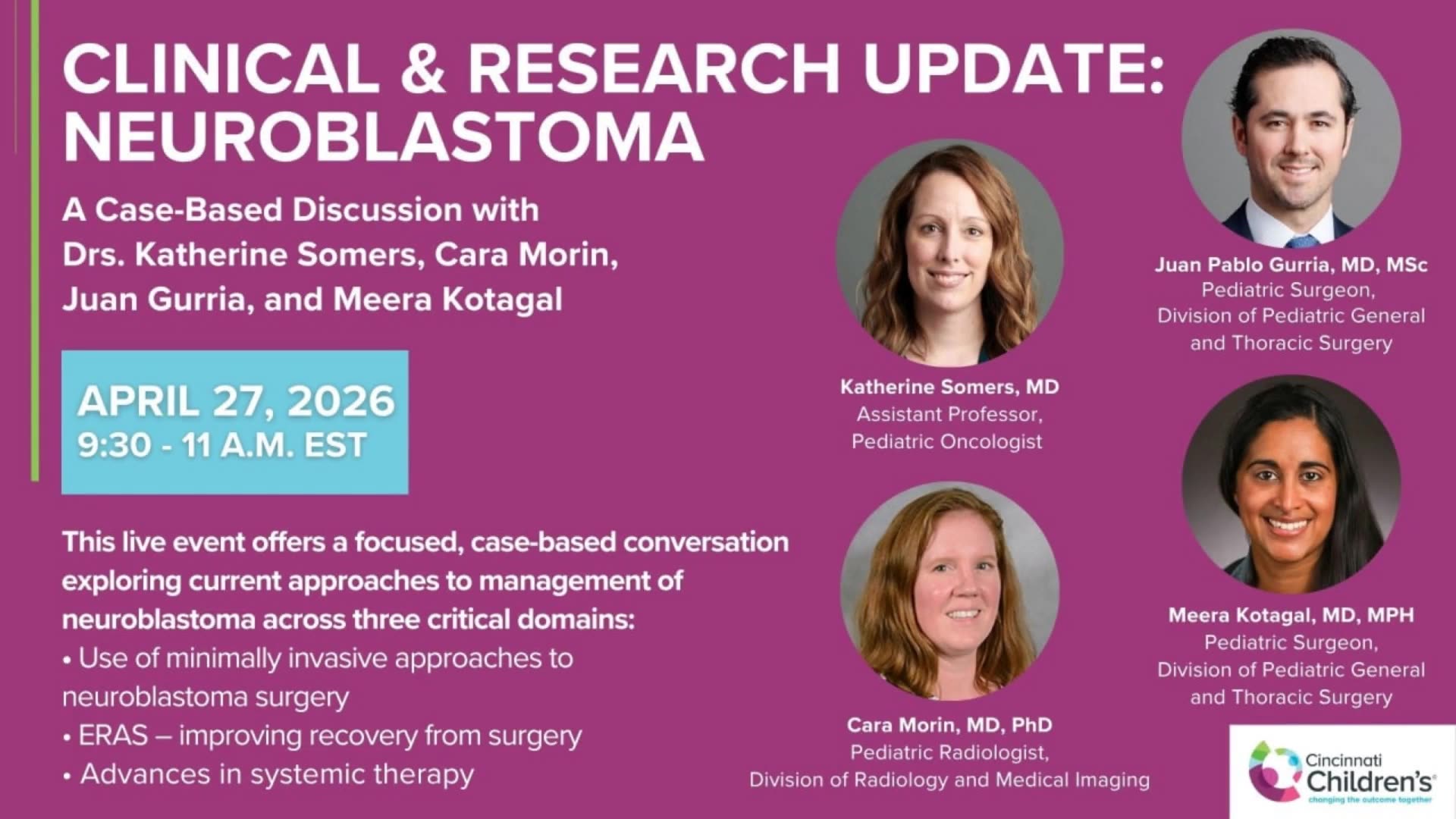
Clinical & Research Update: Neuroblastoma with Drs. Katherine Somers, Cara Morin, Juan Gurria, and Meera Kotagal
67 min · Published Sep 2026
Video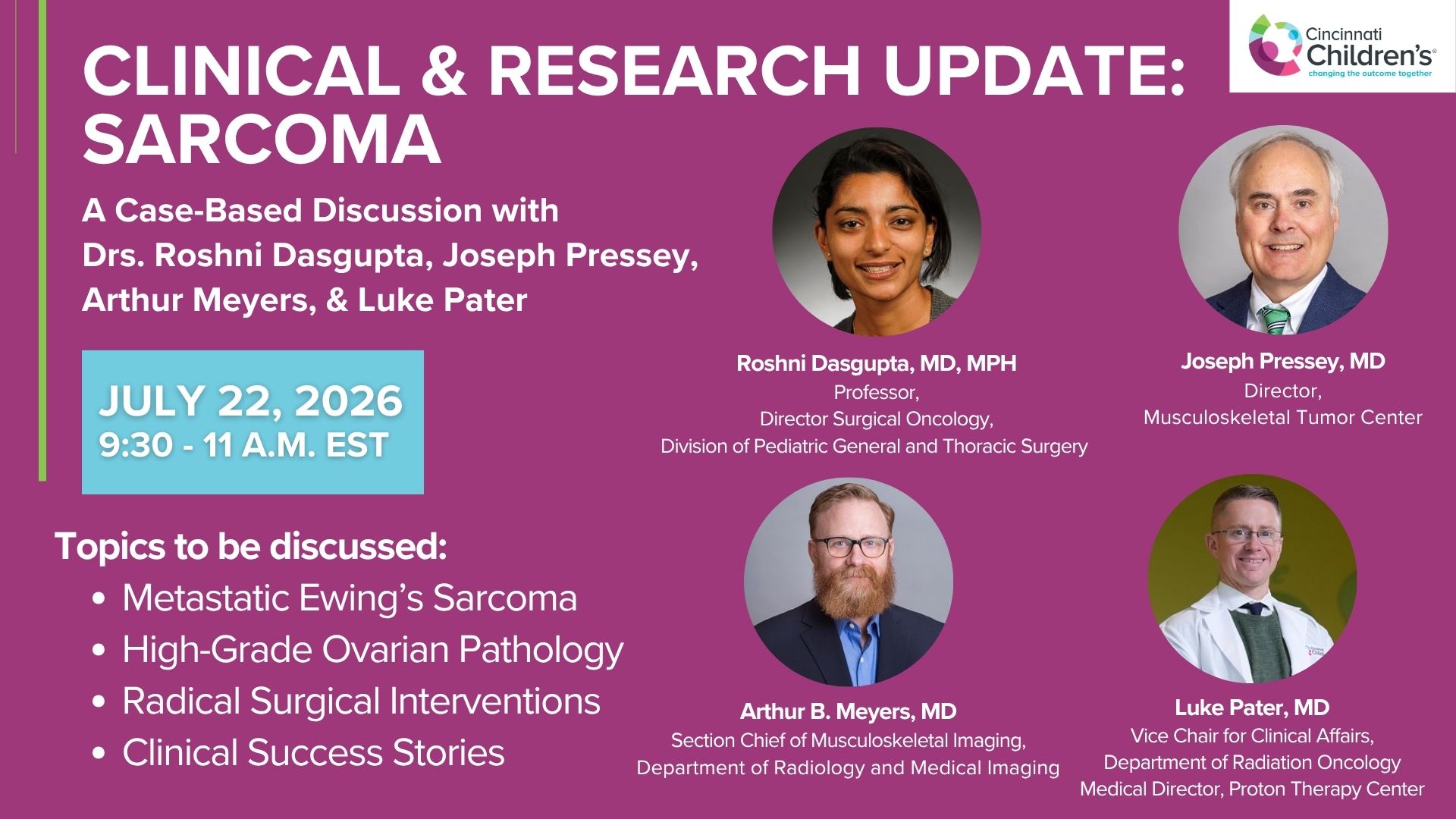
Clinical & Research Update: Sarcoma w/ Drs. Roshni Dasgupta, Joseph Pressey, Arthur Meyer, Luke Pater
66 min · Published Sep 2026
Video
Update Course Rewind 2025: Nerve Monitoring in Pediatric Thyroid Surgery
6 min · Published Jul 2026
Video
Journal of Pediatric Surgery Article Review: June 2023, AAP Issue
Todd Ponsky · 13 min · Published Jul 2026
Video
Pediatric Surgical Oncology Research Collaborative (PSORC): Studying Rare Pediatric Tumors
56 s · Published May 2026
Video
Intestinal Atresia Types Explained: Grossfeld Classification for Pediatric Surgery
1 min · Published Sep 2026
Video
Derivation and validation of the Pediatric Community-Acquired Pneumonia Severity (PedCAPS) score: A prospective cohort study
50 s · Published Sep 2026
Video
FETO for Late-Diagnosed Severe Congenital Diaphragmatic Hernia (CDH) at Cincinnati Children's with Dr. Beth Rymeski
4 min · Published Sep 2026
Video
Severe Congenital Diaphragmatic Hernia (CDH) Case: FETO Management & Unexpected Findings with Dr. Beth Rymeski
3 min · Published Sep 2026
Video
Fetoscopic Endoluminal Tracheal Occlusion (FETO) Procedure: Step-by-Step Guide with Dr. Beth Rymeski
4 min · Published Sep 2026
Video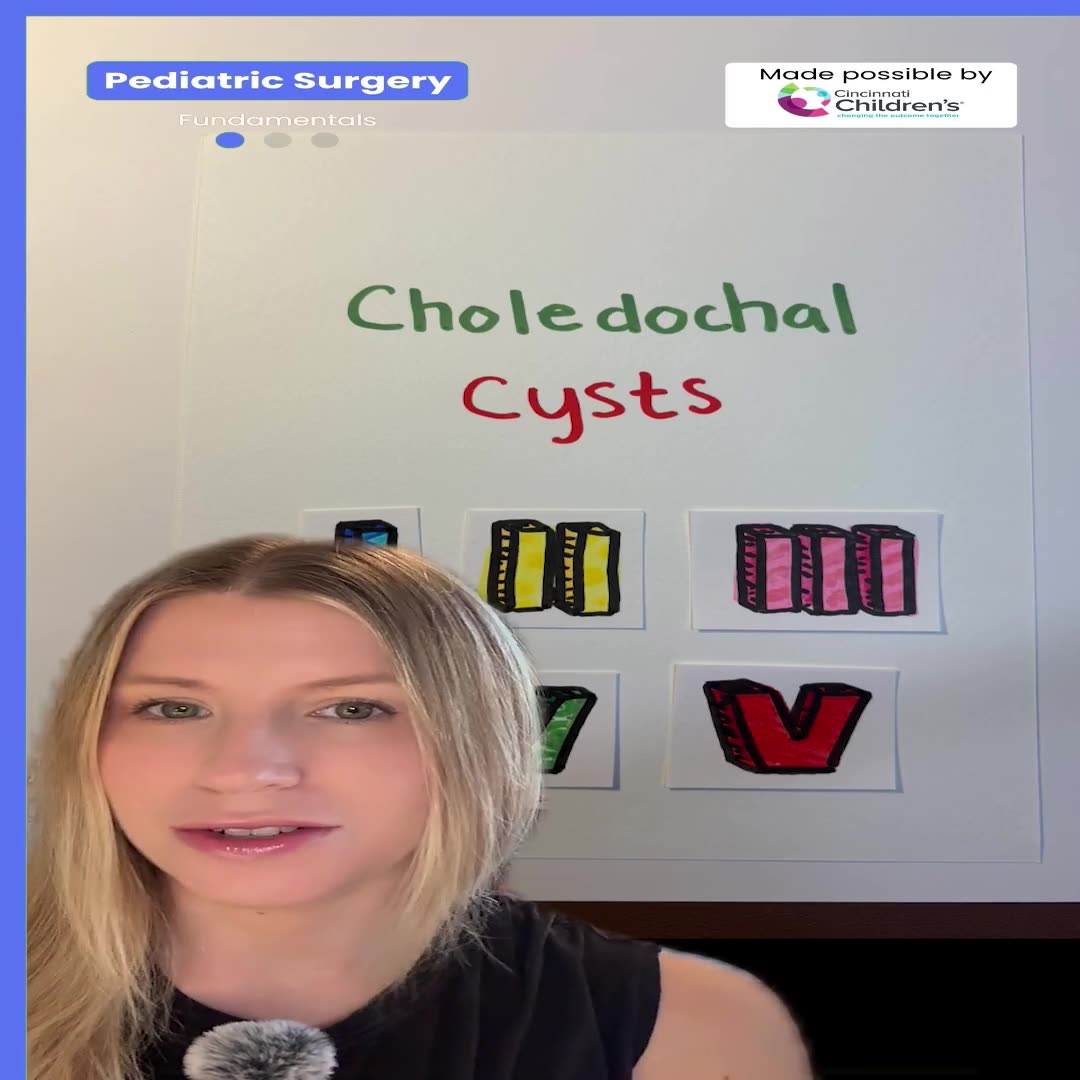
Choledochal Cyst Types Explained: Pediatric Surgery Fundamentals
1 min · Published Sep 2026
What the experts said
The current status for bilateral Wilms tumor with positive lymph nodes and lung metastasis is to start chemotherapy without biopsy.
Tumor shrinkage is defined as a decrease of 50% in tumor size.
The concept with bilateral Wilms tumor is to preserve as much kidney tissue as possible.
If a tumor has not been biopsied and is not responding to chemotherapy, there may be anaplastic elements that would respond to a more aggressive chemotherapy regimen.
Wilms tumors are heterogeneous and biopsy might miss foci of anaplasia.
When bilateral Wilms tumors stop shrinking after chemotherapy, it is usually because of mesenchymal differentiation and not anaplastic tumor.
Bilateral nephron-sparing surgery can be performed surprisingly often in large bilateral Wilms tumors.
The surgical technique for bilateral nephron-sparing involves putting the kidneys on ice, clamping the vessels, then sharp dissection to remove the tumor.
Stage 3 local Wilms tumor requires radiation on both sides.
Recurrence of anaplastic Wilms tumor portends a very bad outcome.
Salvage is difficult for anaplastic Wilms tumor recurrence, despite chemotherapy.
Bilateral Wilms tumors are no longer biopsied upfront; they are treated with chemotherapy first.
Once anaplastic Wilms tumor recurs, it is very hard to salvage.
Multifocal Wilms tumors raise concern about the underlying embryology of the kidney and risk for developing additional tumors.
Mutations in WT1 or WT2 increase risk for additional Wilms tumors.
97% of large bilateral kidney tumors in children are Wilms tumor.
Upfront chemotherapy without biopsy is appropriate for bilateral kidney tumors because only a very small percentage are not Wilms tumor.
Bob Shamberger has made the point that if a Wilms tumor is not responding to chemotherapy, tissue is needed to check for anaplasia.
Most pathologists think anaplasia in Wilms tumor is present primarily rather than induced by chemotherapy.